Don’t miss an episode. Get our podcast sent straight to your inbox every week.
Don’t miss an episode. Get our podcast sent straight to your inbox every week.
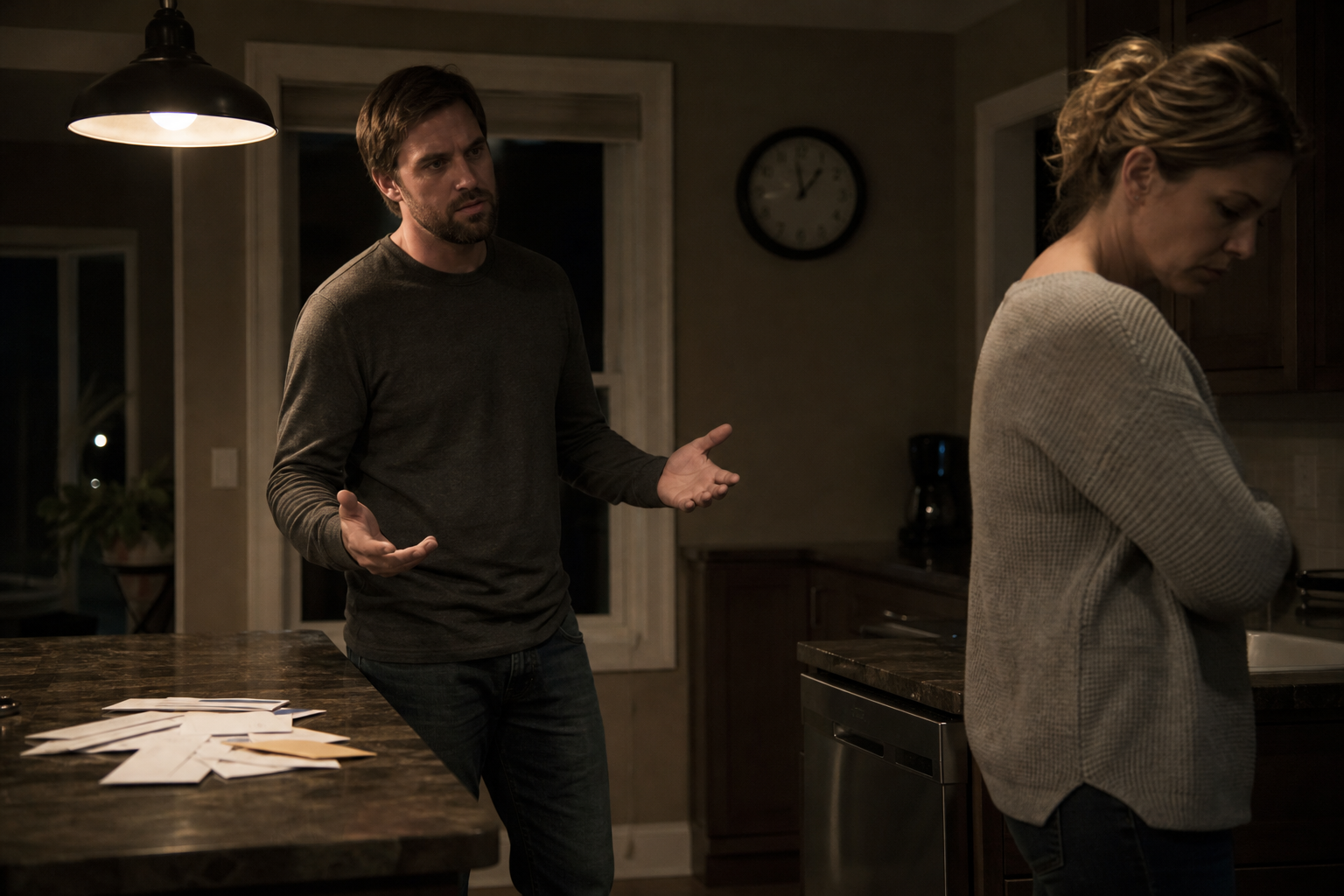
You said it in the kitchen, somewhere between the dishwasher and the mail. “Sorry. I said I’m sorry. What else do you want?” She nodded, walked out, and the house got very quiet. You won the argument about the apology and lost the evening.
Here’s the part nobody tells married businessmen: you can say the word and still not apologize. Your wife can hear the difference from across the house.
Sound familiar?
The short answer
To apologize to your wife when you were wrong, use a direct four-step framework: name the specific action, articulate the emotional cost to her, own the fault without making excuses, and implement a visible behavioral change. Married businessmen must clear emotional backlogs and restore relational leadership through tools inside The Activation Method.
Why does "I'm sorry" keep failing with your wife?
Because to you it’s a closing statement and to her it’s an opening one. You say it to end the conflict. She’s waiting to find out whether you understand what happened.
Think about how you run a meeting. When a client is angry, you don’t say “sorry you feel that way” and move on. You find out what broke, you say it back, and you fix it. At home, tired and defensive, that skill goes missing. (Doug 1.0 once apologized to my wife for “the misunderstanding.” She asked which part I misunderstood. I had no answer, which was the answer.)
The word fails because it carries no information. She needs proof that you saw it the way she saw it.
What does a real apology to your wife include?
It has four parts, and the order matters.
Framework Step
What It Sounds Like
What Destroys It
1. Name the Action
“I cut you off at dinner and checked my phone while you were talking.”
“I’m sorry for whatever I did to upset you.”
2. State the Cost
“That made you feel like your thoughts and time don’t matter to me.”
“I know you’re just being emotional right now.”
3. Own It Cleanly
“That was completely on me. No excuses.”
“I was stressed with work, and you were also nagging me.”
4. Change One Thing
“My phone stays in the kitchen drawer during our conversations.”
“I will try harder to do better next time.”
Look at the last column. Every phrase there protects you. Every phrase in the middle column costs you a little pride, and that cost is exactly why she believes it.
Read the “but” rule twice. The moment you add “but,” everything before it gets erased. “I’m sorry I snapped, but you know I’ve had a brutal week” is a complaint wearing an apology as a hat.
When is the right time to apologize?
Not during the fight. A man in the middle of a fight is trying to win, and she can tell. Say it once the adrenaline is gone: usually an hour, sometimes the next morning.
Don’t wait a week, though. Every day you delay, the silence tells her you’re fine with it.
If you need to buy time, say so plainly: “I’m too heated to say this right. Give me an hour and I’ll come find you.” Then go find her. A promise to apologize that you actually keep is the first piece of the apology.
How does the Hidden Motives Technique make your apology land?
The Hidden Motives Technique is a communication protocol practiced by married businessmen to identify the underlying emotional need behind a spouse’s frustration before responding. Most apologies fail at the second part, the cost, because we guess wrong. You think she’s upset about the late dinner. Underneath, she’s upset because she planned the evening around you and you didn’t text.
Before you apologize, ask one question: “What was that like for you?” Then stay quiet and let her answer. Don’t defend. Don’t correct the timeline.
When she says, “It felt like my time doesn’t matter,” you now have the sentence your apology was missing. Say it back to her in your own words. Nothing you could have scripted ahead of time works as well.
What if the same fight keeps coming back?
Then the apologies are working like a pressure valve. They release the tension and change nothing, and she knows it, so each new one is worth less than the last.
The Clean Slate Method is a structured conversation framework used by married couples to clear historical resentments, resolve repeated grievances, and reset marital trust. It’s the conversation we teach at The Powerful Man where you list the repeated offenses, own your part in each, hear her side, and agree on new terms. It takes about an hour and it’s uncomfortable. It also works on the marriages where “I’m sorry” has become a joke between you.
Pick the single pattern that shows up most. Late nights, the phone, the tone you use when you’re tired. Start there.
Which of the Five Territories is your apology really about?
The Five Territories framework is a capacity management model for married businessmen to evaluate, balance, and lead across Self, Health, Relationships, Wealth, and Business. The Activation Method is built on it, and it works as a diagnostic here. When you snap at your wife after a 12-hour day, the Relationships territory gets the blame, but the cause often sits in Business or Health. You skipped lunch, you slept five hours, a deal went sideways.
After you apologize, ask where the pressure came from. Alpha Decompression is a 10-minute transition routine executed between the workday and home to reset the nervous system from executive stress to present family leadership. If you’re apologizing for the same snappy tone every Thursday, the fix may be a better version of that routine at 5:30 p.m. rather than a better speech at 9:00.
That is not an excuse. You don’t say it to her as a reason. You use it privately to stop repeating the offense.
What should you do after you apologize?
Stop talking. Really. The urge to add one more explanation is strong and it will undo the work.
Then follow through on the one change you promised, for thirty days. She won’t thank you for it. She’ll notice quietly, and about three weeks in something softens. That’s the real apology, the one you deliver with behavior.
If she’s still cold after a sincere apology, give it room. Some hurts take longer than a conversation. Keep showing up the same way and don’t ask her to grade you.
FAQ
What is the biggest mistake men make when apologizing to their wives?
The single most destructive mistake is adding the word “but” to an apology. Explaining why you did what you did turns an apology into a defense. The moment you cite work stress, exhaustion, or her behavior, you cancel out accountability and communicate that your pride matters more than her emotional safety.
How do I apologize to my wife when I do not believe I was wrong?
Apologize strictly for the aspects where you were undeniably at fault: your harsh tone, reactive volume, impatience, or abrupt departure from the room. You do not have to concede on logistical facts, but you must own your poor emotional conduct. Sincerity cannot be faked, and wives detect manufactured apologies immediately.
Should I apologize to my wife in person or via text message?
Always apologize in person so she can read your body language, eye contact, and tone of voice. A text message signals avoidance and emotional cowardice. If intense anger requires a cooling-off period, state that you need one hour to settle down, then return to speak face-to-face.
What should I do if my wife refuses to accept my apology?
Deliver your four-part apology cleanly once, then stop talking. Demanding immediate forgiveness turns an apology into relational pressure. Accept that rebuilding emotional safety takes time, respect her emotional space, and demonstrate remorse through thirty days of consistent, visible behavioral changes.
How can I stop having the exact same fight with my wife?
Recurring arguments indicate that previous apologies functioned only as temporary pressure valves without addressing underlying root causes. Use the Clean Slate Method to hold a structured conversation where you address historical resentments, clarify hidden expectations, and establish permanent behavioral boundaries.
Why does saying “I’m sorry” feel so difficult for male entrepreneurs?
High-performing businessmen are conditioned to win negotiations and defend positions. In the boardroom, conceding error can feel like surrendering leverage. In marriage, treating an apology like a commercial negotiation erodes intimacy. True masculine leadership requires owning mistakes decisively without defensiveness.
Where to go from here
Tonight, pick one thing from this week you owe her. Write the four parts on a sticky note: the specific act, the cost, “that was on me,” and one change. Say it in under two minutes. Then close your mouth.
Not sure where you stand? Take the TPM assessment to answer a few quick questions and get pointed to the right next step for where you are right now. It takes about three minutes.
If you’re one of the married businessmen who can negotiate a seven-figure contract but freezes when your wife says “we need to talk,” The Activation Method is the next step. It’s eight weeks of live coaching with Doug Holt or a Master Coach, built on the Five Territories, the Hidden Motives Technique and the Clean Slate Method. Men who finish it and want more can earn a place at The Alpha Reset, and then the Brotherhood.
Your wife will take an imperfect husband who says “that was on me” and proves it on Tuesday.
As always, I’m in your corner.
About the author
Doug Holt is co-owner of The Powerful Man, which he runs with Tim Matthews. He coaches married businessmen through The Activation Method and The Alpha Reset, and hosts The Powerful Man Show, now past 1,100 episodes. He’s been coaching for 30 years. He lives on a ranch in Sisters, Oregon, with his wife, Erin, and their two kids.